Namibian Mining News The Professional Mining Journal



Related Articles
The Electricity Control Board (ECB) has approved a 3.8 percent increase in NamPower’s bulk electricity tariff for the upcoming 2025/2026 financial year. This follows NamPower’s initial application for a 17.44 percent increase, submitted on 17 February 2025, which was thoroughly reviewed by the ECB Board of Directors during meetings held on 16 April and 12 May 2025.
NamPower had requested a tariff increase that would have seen the average bulk tariff rise from N$1.9856 to N$2.3319 per kilowatt-hour. The utility argued that the adjustment was necessary to meet its annual revenue requirement, which covers operational expenses, maintenance, salaries, customer services, and asset-related costs including depreciation and return on investment. However, after a comprehensive review of the application, the ECB opted for a significantly lower increase of 3.8 percent. This translates into a new approved tariff of N$2.0611 per kilowatt-hour, with the Namibian government stepping in to provide N$283 million in financial support to NamPower to help cushion the impact of the lower-than-requested increase.
The ECB’s decision came after careful analysis of NamPower’s financials, including its revenue requirement, which was adjusted downward from N$8.8 billion to N$8.1 billion. The review process also considered the potential economic impact of the tariff increase, including its effect on inflation, GDP growth, and electricity affordability for consumers. Public consultations were held with various stakeholders, including members of the public, ratepayer associations, independent power producers, and government agencies. Their feedback was taken into account in determining the final outcome.
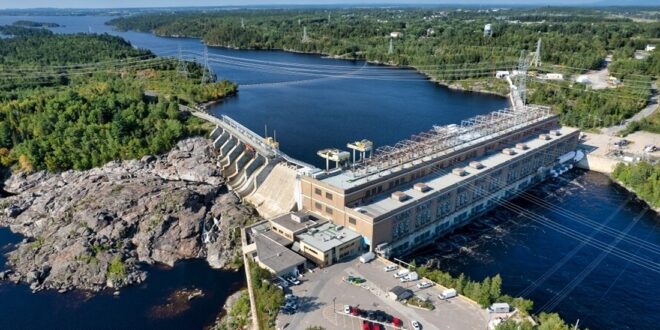
One of the contributing factors that allowed for a more moderate tariff adjustment was an over-recovery of N$963 million during the 2023/2024 financial year. This surplus was largely due to higher-than-expected generation from the Ruacana Hydropower Plant and was used to ease the pressure on the revenue requirement for the new financial year. Additional factors that influenced the ECB’s decision included the increased cost of imported electricity, about 29 percent of which is paid in US dollars and therefore subject to exchange rate fluctuations, as well as an increase in the value of the transmission regulatory asset base, which rose from N$14.55 billion to N$21.4 billion.
Although the approved increase is below the current inflation rate of 4.2 percent, it is expected to have a minimal impact on future inflation and prices of goods and services. However, the ECB noted that even modest increases in electricity tariffs can slightly affect GDP growth, as electricity is a component of inflation calculations.
The ECB emphasized that while it is sensitive to the impact of tariff increases on consumers, avoiding adjustments altogether would lead to long-term consequences such as infrastructure deterioration, grid instability, and blackouts. Such outcomes would hurt the economy and make Namibia a less attractive destination for investment. Therefore, periodic and reasonable tariff adjustments are necessary to maintain the health of the electricity sector and ensure a stable and secure power supply for the country.
In a statement, ECB CEO Robert N. Kahimise assured the public that the tariff review process was conducted with careful judgment and integrity. He emphasized the importance of balancing affordability with the need for continued investment in infrastructure to support reliable electricity supply, which is vital for economic growth and development.