Namibian Mining News The Professional Mining Journal




Related Articles
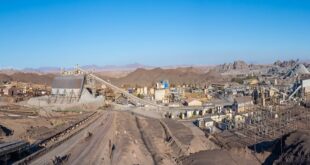

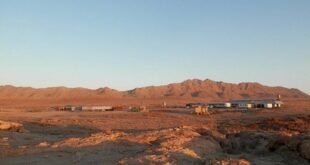
Namibia is set to host the Uranium Legacy Sites in the Africa Region Workshop in Swakopmund from 23 – 27 November 2026, positioning itself at the centre of continental efforts to address the long-term environmental footprint of uranium mining. The workshop, organised in partnership with the International Atomic Energy Agency (IAEA), will bring together African countries to advance coordinated approaches to the management, rehabilitation and monitoring of legacy uranium sites.
As one of the world’s leading uranium producers, Namibia’s role extends beyond extraction to shaping best practice in responsible resource stewardship. Announcing the latest Cabinet decisions, Minister of Information and Communication Technology Emma Theofelus noted that the platform will facilitate technical collaboration, knowledge exchange and policy alignment across the continent. The focus is on strengthening capacity to manage historical mining impacts while ensuring environmental protection, public safety and sustainable land use.
The initiative comes at a time when global demand for nuclear energy is resurging, placing uranium-producing nations such as Namibia under increasing scrutiny to balance production growth with environmental accountability. Hosting the workshop signals Namibia’s intent to lead not only in supply, but in governance standards across the uranium value chain. Beyond the nuclear sector, Cabinet’s latest resolutions reflect a broader strategy to deepen international partnerships across economic, environmental and security priorities.
Cabinet also approved a Development Cooperation Agreement with China, which includes a grant of approximately N$480 million to support Namibia’s national development priorities. The agreement is expected to be formalised through high-level bilateral engagements, reflecting the continued strengthening of economic and strategic ties between the two countries. In the environmental space, Namibia approved its accession to the Agreement on the Conservation of Albatrosses and Petrels (ACAP), reinforcing its commitment to biodiversity protection and sustainable marine resource management. The move aligns with growing global pressure on coastal nations to safeguard vulnerable seabird populations affected by fishing activities, pollution and climate change.
Further advancing its ocean economy strategy, the Cabinet endorsed a Memorandum of Understanding with Spain focused on fisheries and aquaculture cooperation. The agreement will support marine scientific research, fisheries governance, technology transfer and capacity building, all critical to enhancing sector sustainability and productivity. On the security front, Namibia approved a bilateral agreement with China’s Ministry of Public Security aimed at strengthening cooperation in combating transnational crime. The partnership will focus on information sharing, training and the exchange of law enforcement expertise.
The cabinet also reviewed outcomes from the 11th Namibia–Russia Intergovernmental Commission on Trade and Economic Cooperation, directing ministries to implement resolutions designed to expand trade, investment and industrial collaboration.
Collectively, these decisions reflect a deliberate positioning of Namibia as a globally engaged resource economy, leveraging its mineral wealth while strengthening institutional frameworks, environmental governance and strategic alliances.
With decades of uranium production underpinning its economy, Namibia now faces the parallel imperative of managing legacy sites left by earlier mining operations. These sites require sustained monitoring, rehabilitation and technical oversight, making initiatives such as the upcoming workshop critical to ensuring that the country’s nuclear future is matched by responsible environmental stewardship. Stepping further into the global nuclear energy landscape, Namibia’s ability to lead on both production and post-mining management will define not only its credibility but its long-term competitiveness in an increasingly sustainability-driven market.