Namibian Mining News The Professional Mining Journal




Related Articles
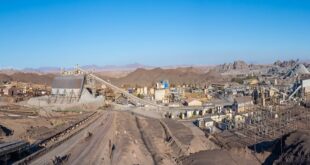
The Namibian government is strengthening its push to attract Chinese investment across key sectors as it positions itself as a strategic cooperation hub for China in southern Africa.China is already Namibia’s largest source of foreign direct investment, accounting for about 30 percent of total inflows and its second-largest trading partner after South Africa. More than 50 Chinese companies operate in the country, including major investors behind the Swakop Uranium’s Husab Mine and the Rossing Uranium Mine.
“Namibia welcomes partners who share our vision to add value to our resources, expand renewable energy and strengthen agriculture for food security. We believe in cooperation where both Namibia and China benefit,” said Tonata Itenge-Emvula, Namibia’s new Ambassador to China. She also said that Namibia welcomes Chinese companies with the expertise, innovation and capital needed to drive value addition, industrial growth and skills transfer. The country, she added, is committed to building long-term trade and investment partnerships rooted in mutual respect, shared economic priorities and sustainable development. Namibia’s investment priorities are closely aligned with sectors in which China has global leadership, including renewable energy, agricultural modernisation and large-scale industrial processing.
The Ambassador highlighted Namibia’s fast-growing green energy sector, noting that the southern coastline hosts one of Africa’s most advanced large-scale green hydrogen projects. Abundant wind and solar resources will enable Namibia to produce clean fuels, green ammonia and green industrial products for global markets including China’s rapidly expanding clean energy sector. Recent offshore oil discoveries, estimated at more than 3 billion barrels have also positioned Namibia as an emerging petroleum hub. Itenge-Emvula encouraged more Chinese participation in refining and downstream oil and gas processing to help the country move beyond raw material exports and build an industrial base that creates jobs and technical capacity.
Agriculture and food processing remain central to Namibia’s cooperation agenda with China. With increased investment in irrigation, cold chain systems and modern agro-processing, Namibia aims to supply premium food products to Asian markets and support China’s long-term food security needs. “Food security is central to reducing poverty and strengthening livelihoods, and we see significant opportunities for cooperation with Chinese partners,” said Itenge-Emvula . Namibia is also a key supplier of minerals essential to global clean energy industries. The country is the world’s third-largest producer of uranium and holds confirmed deposits of lithium, cobalt, nickel, manganese and copper. Existing Chinese investments such as uranium resources developed by the China National Nuclear Corporation have already strengthened cooperation.
Itenge-Emvula invited more investors to support local mineral processing and industrialisation rather than the export of unprocessed ore. These investment opportunities are bolstered by Namibia’s participation in the Forum on China-Africa Cooperation and the Belt and Road Initiative, which provide favourable financing, trade facilitation and technology-exchange platforms for enterprises in both countries. She concluded that Namibia’s strategic location offers access to the Southern African Development Community, a market of over 360 million people with a combined GDP exceeding $750 billion.Noting that Namibia stands ready to facilitate business missions, tourism and investment-related travel in order to deepen bilateral cooperation.