Namibian Mining News The Professional Mining Journal




Related Articles
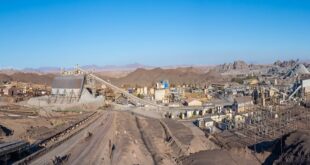
The volatile geopolitical climate surrounding the Strait of Hormuz has sent shockwaves through the global energy market, pushing international oil prices to a decade-high of 120 US dollars per barrel. For the mining sector, where fuel is consumed on an industrial scale, these price spikes represent a critical threat to operational viability. During a recent media excursion at Swakop Uranium’s Husab mine, leadership detailed how the facility is navigating these supply shocks by pivoting toward advanced technology and survival-driven efficiency strategies to mitigate a staggering annual consumption of nearly 80 million litres of diesel.
Central to this defensive strategy is the implementation of an innovative trolley line system designed to decarbonise and de-cost the mine’s heavy hauling activities. This system utilises overhead power lines and pantograph devices mounted on large haul trucks, allowing them to switch from diesel engines to electric power when traversing the steep, energy-intensive ramp sections of the pit. By drawing electricity directly from the grid during these high-load intervals, diesel consumption drops to levels comparable to an idling vehicle. Beyond the immediate cost savings, the electric transition allows for higher travel speeds on inclines, thereby reducing cycle times and enhancing overall pit productivity.
The economic pressure on Namibian extractives is being compounded by global supply chain disruptions that have driven up the costs of essential chemicals and inputs. While the Namibian government has intervened via the National Energy Fund to absorb approximately N$1.3 billion in supplier costs for April and May 2026, the long-term burden remains on the operators to innovate. With diesel accounting for 70 percent of the nation’s 100 million-litre monthly fuel consumption, the mining industry’s exposure to the US dollar-denominated oil barrel remains its greatest overhead risk, necessitating a move toward “survival planning” through technological integration.
The drive toward electrification at Husab is not merely an environmental consideration but a fundamental requirement for remaining competitive in a high-cost environment. As mining companies across the region face similar inflationary pressures, the success of the trolley assist model serves as a benchmark for how capital-intensive operations can buffer themselves against external market shocks. By investing in skilled personnel and smart infrastructure, the industry is seeking to ensure that production remains sustainable even when global energy markets remain in a state of flux.
Reflecting on the sheer scale of the challenge facing large-scale extractives, Irvinne Simataa, Executive Vice-President of Swakop Uranium, remarked: “For a business like ours you do know that the fuel impact is more significant due to the amount of fuel we use daily in our operations. You can imagine your fuel tank in your vehicle maybe is about 45 litres. You can drive maybe 130 litres or 240 litres. But we are consuming 79 million litres.”