Namibian Mining News The Professional Mining Journal



Related Articles


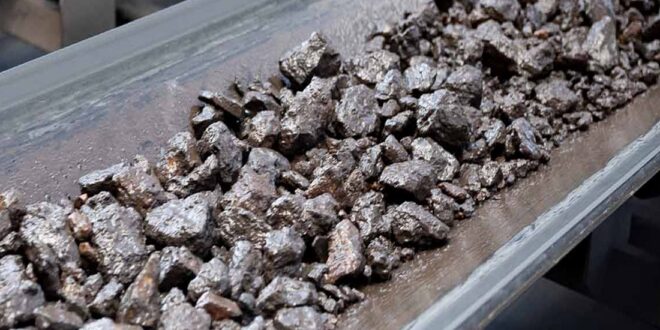
Between the Kalahari manganese field and the ports that carry its ore to the world lie 1 000 km of rail and road and for Tshipi é Ntle Manganese that stretch is the biggest line in the cost sheet. In the 2026 financial year the company found enough ways around it to sell 3.5 million tonnes, ahead of its full year targets and its historical average of 3.4 million tonnes a year, according to the annual report of part owner Jupiter Mines, issued on 30 September 2026.
The secret was options. Tshipi, which runs its mine in South Africa’s large, low cost Kalahari field, used multiple export ports and shifted volumes between rail and road as conditions and demand changed. Of the tonnes sold, 828 000 left through the Port of Lüderitz in Namibia, close to a quarter of the total. Total rail volumes reached 2.6 million tonnes as availability beat planning assumptions, helped by fewer derailments and cable theft incidents, larger wagons, upgraded rail infrastructure and continued engagement with State owned rail enterprise Transnet. Emerging miners using less rail than expected also freed up capacity on the network. Flexibility came at a price as road haulage costs rose as Tshipi turned to trucks to support offshore exports and to absorb rail disruptions, including derailments and planned Transnet shutdowns, which is why the company uses cheaper rail wherever it can.
Longer term certainty is now in sight. Tshipi has joined the Manganese Export Capacity Allocation framework, known as MECA3, a public private arrangement between Transnet and manganese producers that gives participants ten years of certainty over rail and port allocation, replacing the old annual process with a demand led model. At Lüderitz, Tshipi and Tradeport Namibia are planning a transshipment project that would let larger vessels load at anchorage and so cut freight costs. The project progressed during the year, although final investment decisions, completion dates and commissioning milestones remain undisclosed.
The ownership is split between ASX listed Jupiter, which holds 49.9% of Tshipi, and JSE listed Exxaro Resources, which holds 50.1%. For Jupiter the returns have been striking. Over the last eight years Tshipi has enabled it to pay dividends of $451 million, which equals more than 90% of Jupiter’s current market capitalisation and it reported a net after tax profit of $37.6 million for the 2026 financial year. The mine, whose name means “beautiful steel” in Tswana, has a resource that supports more than 100 years of mine life.
Jupiter is also looking beyond ore. It is exploring a downstream entry into high purity manganese sulphate monohydrate, known as HPMSM, a refined product used in cathode materials for manganese rich battery chemistries, by converting low grade ore and stockpiles from Tshipi. The company is advancing the opportunity in phases, without committing significant capital, and will focus on reducing the risk in its volume and pricing assumptions. World steel forecasts, which drive most manganese demand, point to growth of 0.3% in 2026 and 2.2% in 2027. Solar power and battery storage at Tshipi have also proved cost effective, and Jupiter says the timing will reflect advances in solar technology, grid reliability and competition among independent power producers.