Namibian Mining News The Professional Mining Journal




Related Articles
At a critical minerals dialogue in Swakopmund, the conversation around local participation in Namibia’s booming mining sector took a decisive turn. Industry experts and regional leaders emphasized that true local involvement requires moving far beyond superficial contract bids and traditional equity ownership. To build long-term economic resilience, domestic enterprises must be integrated across every operational layer of the mining value chain.
Addressing delegates at the coastal gathering, Andreas Salom, Senior Investment Analyst at the Namibia Investment Promotion and Development Board (NIPDB), cautioned that domestic businesses are overlooking substantial commercial avenues by maintaining to narrow a focus. Commercial opportunities extend far beyond initial concessions or direct resource extraction.
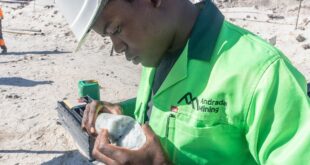
“Opportunities are there throughout the life cycle of the mine,” Salom noted. “During exploration, there is drilling, surveying and sampling.” He emphasized that operational phases yield further scope across supply chain logistics, operational management services, and specialized plant maintenance.
A key vector for expanding local participation lies in structured procurement frameworks. While local content policies are widely endorsed, systemic gaps prevent home-grown businesses from fully leveraging these mandates.
“One way we can expand participation is procurement. Everybody talks about procurement in Namibia we like procurement,” Salom said. However, he warned that many Namibian companies remain unaware of upcoming tenders or lack the structural capacity to meet complex technical specifications.
“It doesn’t make sense when mining companies put up big advertisements in the newspaper. Each and every year, small companies apply, and each and every year they’re not getting it. The question is are we developing their capacity?” Salom asked. He stressed that state institutions and industry leaders must provide targeted mentorship, capacity-building, and formal accreditation pathways to enable local enterprises to grow sustainably.
“I want to highlight the supplier path, from demand to repeatable contract. It doesn’t make sense for me as an investor to develop a local company, give them a contract, and then next year they disappear,” Salom added, advocating for long-term capability development over short-term quotas.
Beyond commercial contracting, speakers underscored that regional communities hosting major extraction projects must experience direct, tangible returns both through shared physical infrastructure and accountable revenue stewardship.
“We should be accountable for public revenues. When the government earns taxes and royalties, are they being used for the right things Communities should benefit,” Salom said.
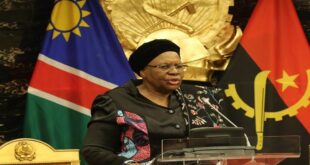
Echoing these sentiments, Erongo Regional Governor Natalia |Goagoses highlighted that rural and host communities require early engagement and clear visibility regarding project impacts and local opportunities.
“Mining takes place within communities and within an environment on which other activities depend. We need to exploit economic opportunities while protecting the environmental assets and livelihoods on which communities depend,” Governor |Goagoses stated. She called for proactive, early-stage consultations to allow residents real input in shaping how resource extraction transforms their region.
As global demand for critical minerals accelerates investment in Namibia, aligning institutional support with genuine community engagement will determine whether this resource surge creates lasting broad-based industrial capability.