Namibian Mining News The Professional Mining Journal



Related Articles
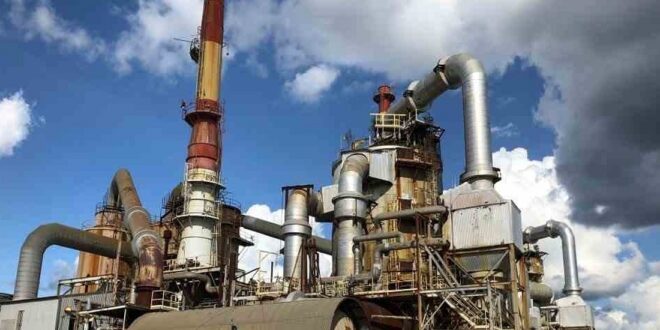
Reducing dependence on imported industrial chemicals could give Namibia’s mining sector greater supply-chain security while opening new avenues for domestic value creation. Green Metals Refining Ltd (GMR) has taken a step towards that ambition, securing environmental approval for a proposed N$1.03 billion sulphuric acid plant and manganese refinery at Walvis Bay, with potential to expand the country’s mineral processing capabilities and industrial base.
The Ministry of Environment, Forestry and Tourism issued an Environmental Clearance Certificate (ECC) on 9 October 2026, following its assessment of the Environmental Impact Assessment and Environmental Management Plan for both projects at Farm 58. The approval removes a key regulatory hurdle as GMR advances the developments towards construction and a final investment decision. The proposed facilities are designed to establish domestic production of battery-grade manganese chemicals and sulphuric acid, an essential industrial input for several mining and manufacturing processes. By developing local supply capacity, GMR aims to reduce reliance on imports while serving demand from copper, uranium, rare earth and fertiliser projects.
GMR Founder and Chief Executive Officer Derk Hartman said the environmental clearance had reduced regulatory risks associated with the developments. “With the Environmental Clearance Certificate in hand for both the manganese refinery and the sulphuric acid plant, GMR has significantly de-risked the projects. This approval is a strong endorsement of our responsible development strategy and our commitment to Namibia’s long-term industrialisation,” said Hartman. The sulphuric acid facility accounts for the more clearly defined investment, with GMR having outlined plans to commit N$1.03 billion to a plant initially expected to produce 175,000 tonnes annually.
A scoping study conducted by Namibia-based Creo Engineering Solutions indicates that production capacity could increase to 720,000 tonnes a year once the facility is fully developed. The plant would supply GMR’s proposed manganese refinery and other industrial customers, creating the potential for Walvis Bay to strengthen its role in the supply of critical inputs to the mining sector. The investment is underpinned by a domestic supply gap and anticipated growth in industrial demand. Namibia currently relies on imported sulphuric acid, while planned mining and processing developments could increase consumption, creating an opportunity for local production to serve a broader customer base.
Hartman previously highlighted the project’s commercial prospects, citing an expected pre-tax internal rate of return (IRR) of 20% based on the initial capital investment. “Namibia is currently a net importer of sulphuric acid, with demand expected to grow due to expanding copper, uranium, rare earth and fertiliser projects. It is expected to deliver a solid return on investment (pretax IRR of 20%) based on an initial capital cost of US$59 million,” said Hartman in September 2025. Beyond its core chemical output, the proposed plant could generate surplus baseload electricity and process steam for industrial use. These additional outputs could broaden the facility’s contribution to the local economy by creating opportunities to supply other industrial users, although the extent of such benefits will depend on the final project design and commercial arrangements.
GMR is progressing the technical work required to advance both developments. The company has completed advanced metallurgical testwork for the manganese refinery’s pre-feasibility study and is undertaking a tender process to appoint an engineering firm to conduct the sulphuric acid plant’s feasibility study. The environmental assessment involved specialists, regulators, government ministries and interested and affected parties to identify and address potential environmental and social impacts. “We are grateful to the team of specialists who worked tirelessly to secure this outcome and we appreciate the constructive engagement from the Ministry of Industries, Mines and Energy and the Ministry of Environment, Forestry and Tourism. Their support has been instrumental in advancing both projects,” noted Hartman.
The developments are being advanced through three wholly owned Namibian subsidiaries. Green Metals Refining Namibia (Pty) Ltd is responsible for the manganese refinery, while Kudu Chemicals (Pty) Ltd is developing the sulphuric acid plant. Foxtrot Industrial Developments (Pty) Ltd will provide infrastructure and shared services for both facilities, with the potential to accommodate additional industrial users. The proposed configuration points to a broader industrial ambition: linking mineral beneficiation with local chemical production and shared infrastructure to retain more economic value within Namibia. For the mining sector, reliable domestic access to processing inputs could also help strengthen supply-chain resilience as new projects move towards development. Environmental approval, however, does not guarantee construction or commercial viability. GMR must still advance the feasibility work and secure a final investment decision before the projects can move into implementation.