Namibian Mining News The Professional Mining Journal



Related Articles
The world’s easiest deposits are running out on land, and that is pushing mining companies back toward an idea they shelved decades ago, pulling metals and minerals straight from the ocean floor. Demand for deep sea cobalt, copper and nickel is climbing fast enough that companies once again have their sights fixed offshore, and Namibia has just become one of the clearest signs of how far that shift has already travelled.
The renewed interest is not happening in a vacuum. An April 2025 executive order from the White House has pushed the conversation toward widespread deregulation, directing agencies including NOAA, which issues undersea exploration licences, to speed up approvals and strengthen the country’s position in the industry. The economic logic is straightforward enough. Everything from smartphones and laptops to car batteries and solar panels depends on the same short list of critical minerals, lithium chief among them and the ocean floor holds a considerable, largely untapped share of that supply.
Deep sea mining is not a new ambition. Scientists first tested the concept commercially in the mid 19th century aboard the British research vessel HMS Challenger, though the industry did not become commercially viable until the mid 20th century. When global companies began gearing up for undersea mining in the late 1970s and early 1980s, the United States and other members of the United Nations moved quickly to regulate the space, including through the 1980 Deep Seabed Hard Mineral Resources Act, an interim law governing how, when and where companies could probe the seafloor. Large enough deposits were secured on land shortly afterward, and the industry’s attention drifted back to conventional mining for several decades.
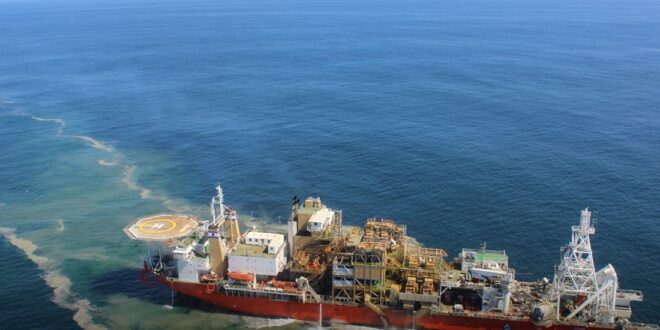
That pause is now ending and states with fewer alternative industries appear to be moving fastest. Namibia has issued what Oceanographic magazine describes as a key environmental clearance certificate for a marine phosphate mining operation, a decision that clears the way for Namibian Marine Phosphate to advance its Sandpiper Project. The project targets a stretch of seafloor roughly 75 miles off the coast of Walvis Bay, not far down the coast from what may be the longest continuous wave on the planet, Skeleton Bay, the break that put Namibia on the global surfing map. Over a 20 year period, the project would dredge the seafloor to produce three million tonnes, equivalent to roughly 3.3 million US tons, of phosphate concentrate. Around 90% of the phosphate mined globally goes into agricultural use and while it carries none of the prestige of a battery metal, global reserves are more finite than they appear.
MIT estimates that current reserves would last between 80 and 300 years at present mining rates, a range wide enough to explain why interest in alternative sources is building now rather than later. The environmental case against seabed excavation remains serious. Oceanographic reports that underwater dredging creates massive sediment plumes that can disperse heavy metals and buried toxins throughout the water column, a risk that has already led Mexico and New Zealand to reject phosphate mining permit applications over ecological concerns.
The Sandpiper Project itself is owned by an Oman based mining company with commercial interest but no local stake in Namibia’s coastline, and the company still needs to secure additional permitting before construction can proceed. What remains unresolved is what large-scale dredging would mean not just for the marine life along that stretch of coast but for one of the most celebrated surf breaks in the world sitting just up the shoreline. Namibia appears willing to find out.